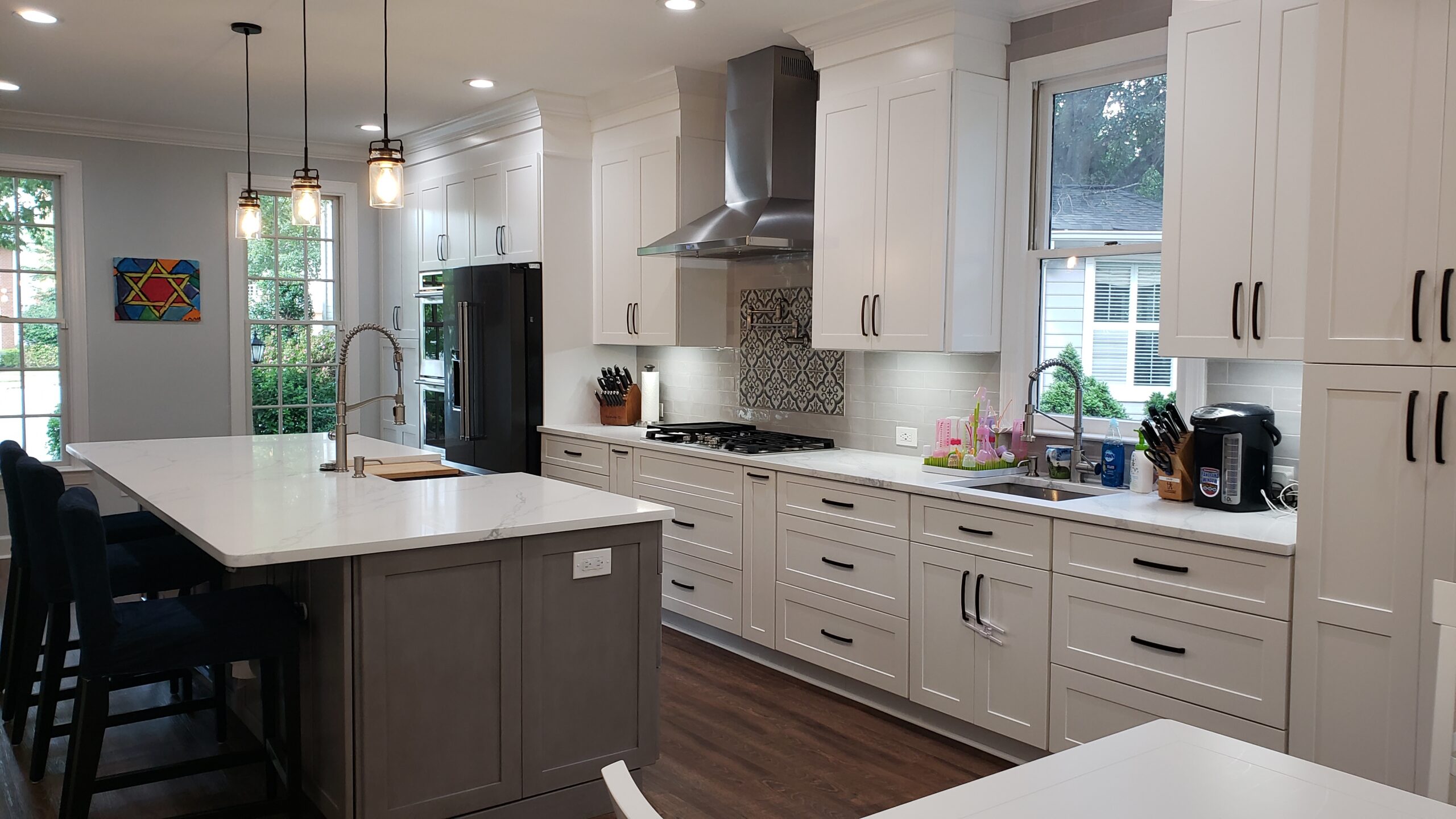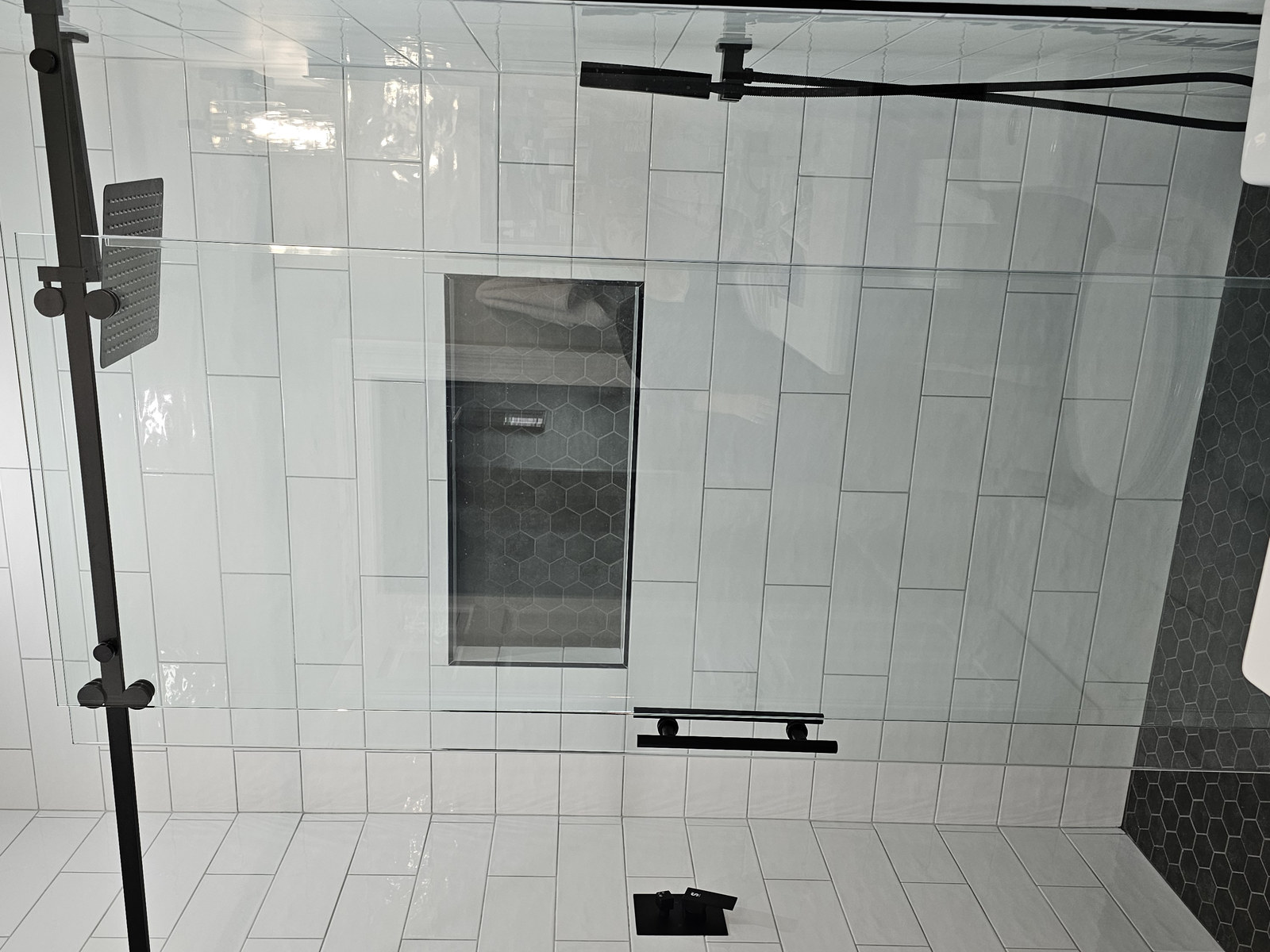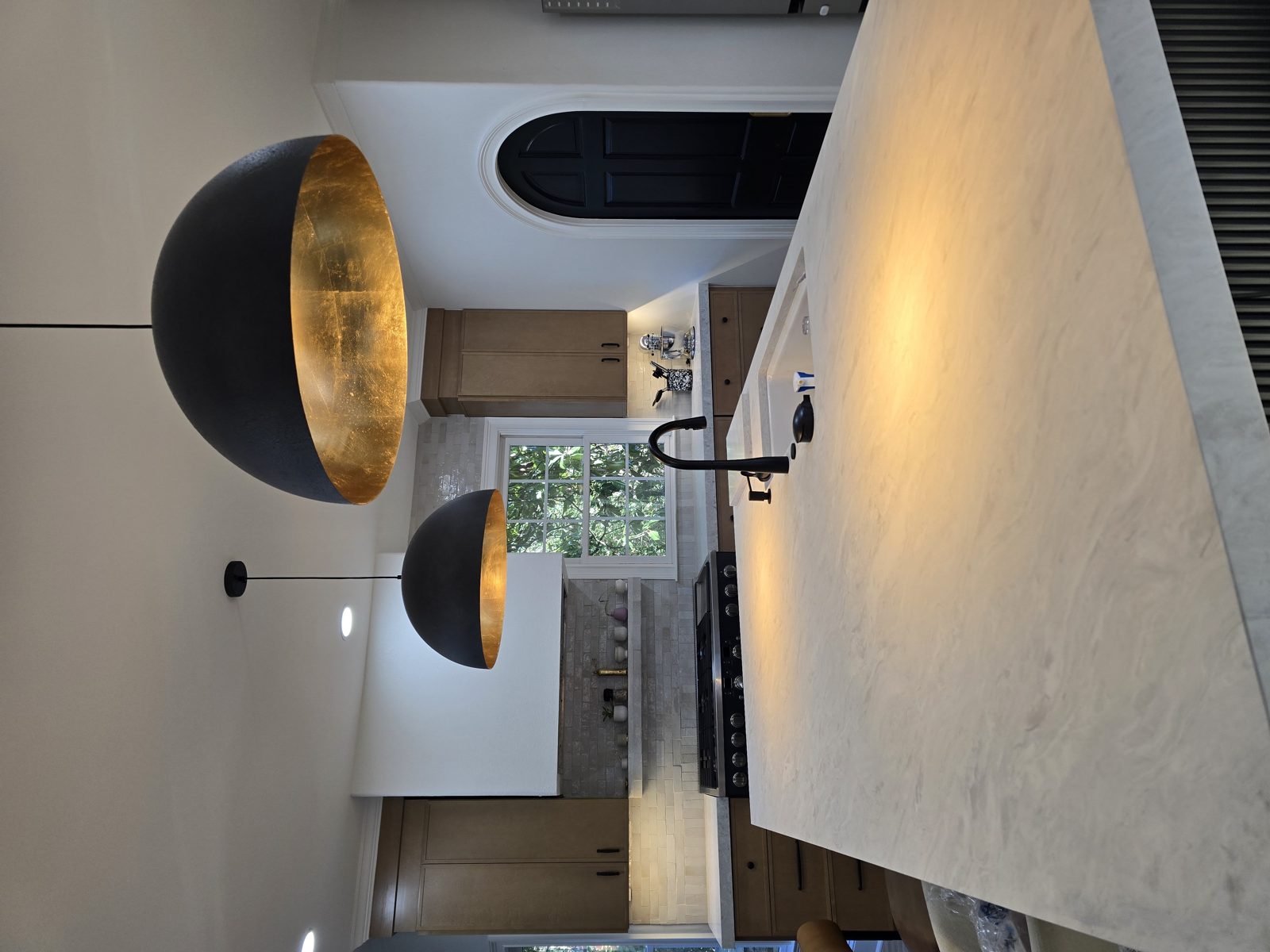
A transitional kitchen sits between traditional and modern. It keeps the warmth of a classic kitchen, like paneled cabinet doors, natural stone and a few decorative details, and pairs it with the clean lines and simple shapes of contemporary design. Houzz calls the style “the great moderator.”
It’s also the most popular choice by a wide margin. In the 2026 Houzz U.S. Kitchen Trends Study, 25% of homeowners who changed their kitchen’s style chose transitional, more than double the next style, traditional, at 12%. Modern (11%) and contemporary (10%) followed.
This guide covers the elements that make a kitchen read as transitional, with photos from real kitchens.
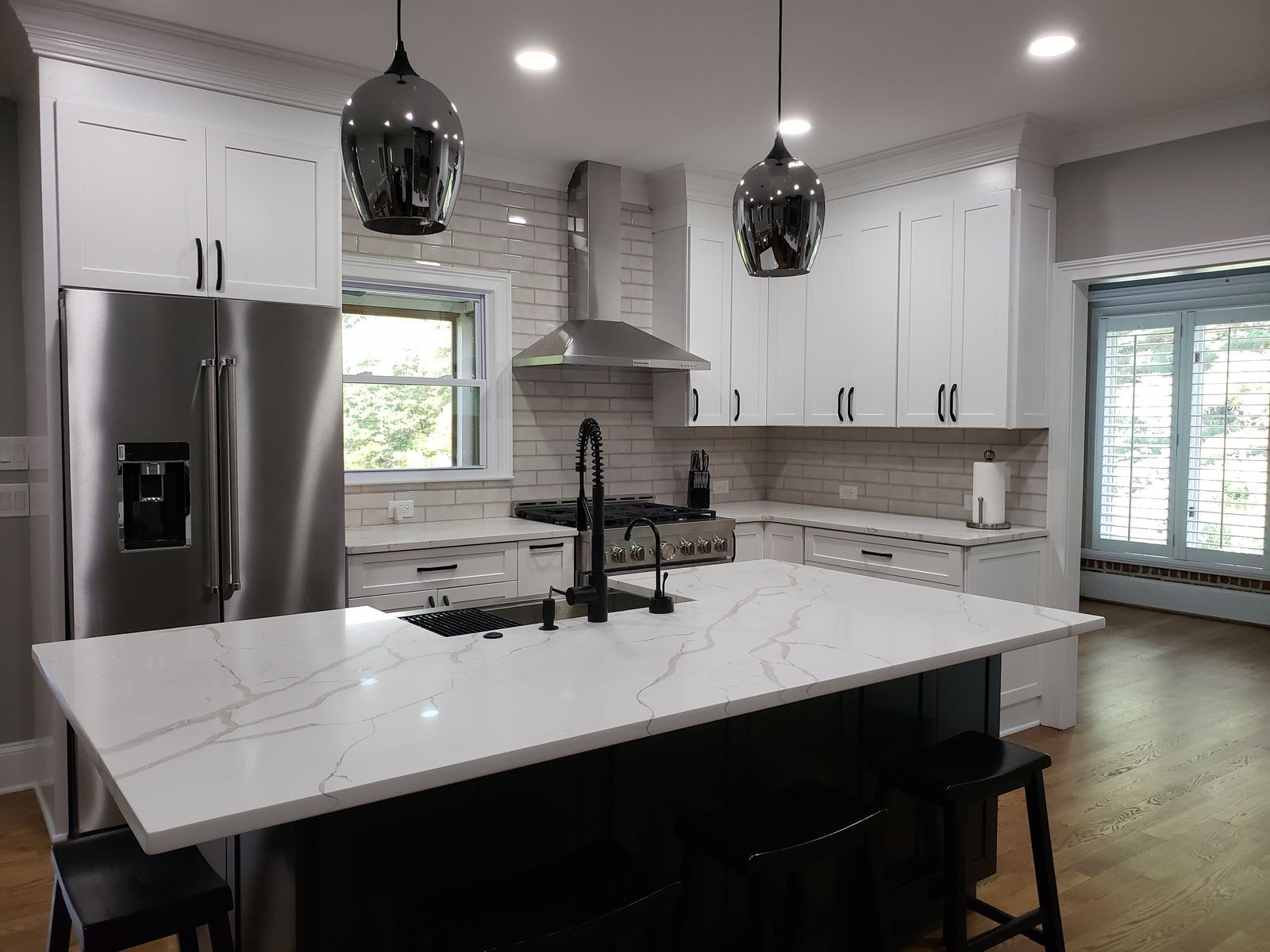
What Makes a Kitchen Transitional?
Traditional kitchens lean on ornament and richer finishes. Modern kitchens strip most of that away. Transitional design keeps a little of each. According to Houzz, transitional kitchens usually have:
- Crisp cabinetry: a streamlined profile that “falls just short of modern,” usually wood, with simple paneled doors and sleek hardware
- Natural surfaces: granite, marble and other stone that suits both traditional and contemporary rooms, without elaborate edge treatments
- Neutral colors layered for a clean but warm effect, with bold color kept to a minimum
- Texture to keep a neutral palette from feeling flat
- A mix of natural and manufactured materials, such as a stainless steel hood against wood cabinets and a stone backsplash
- Just a touch of embellishment, such as millwork or corbels, without going so far that the room reads as traditional
Transitional vs. Contemporary
The two get confused. Cabinet maker Deslaurier explains that “contemporary” means whatever is current, so it changes from year to year, while transitional follows a steadier set of rules: clean lines, neutral palettes and natural materials.
Transitional Kitchen Cabinets
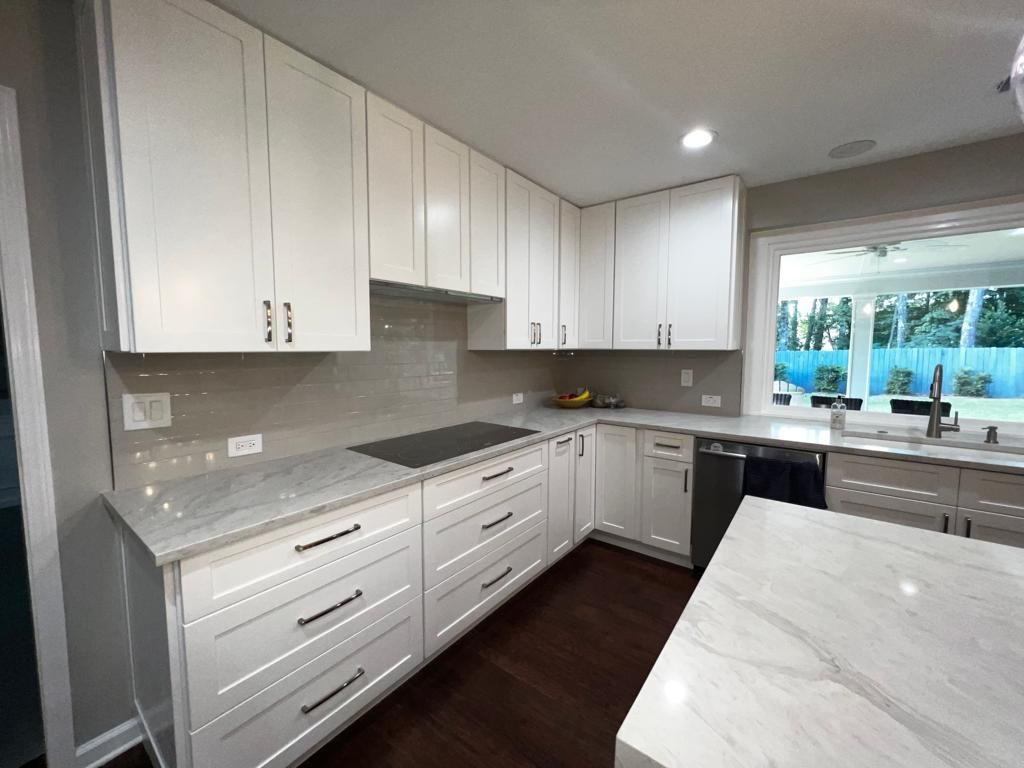
Cabinets set the style more than anything else in the room. In a transitional kitchen, the door is usually a Shaker or other simple recessed-panel door (Better Homes & Gardens). It’s the most common door style in renovated kitchens overall: Shaker doors were chosen by 61% of renovating homeowners in the 2025 Houzz U.S. Kitchen Trends Study.
We can help you choose cabinetry, finishes and materials. If you’re weighing options, read custom vs. semi-custom cabinets and our guide to cabinet door styles and finishes, or see our custom kitchen cabinets.
Colors: Neutrals, Wood and a Little Contrast
White is the classic transitional choice, followed by grays and beiges, with wood tones for warmth. If you want color, Better Homes & Gardens names blue as a leading non-neutral in transitional spaces.
Wood is gaining fast. In the 2026 Houzz U.S. Kitchen Trends Study, wood became the most popular cabinet color in renovated kitchens (29%), just ahead of white (28%). Medium wood tones led (15%), followed by light (11%) and dark (3%).
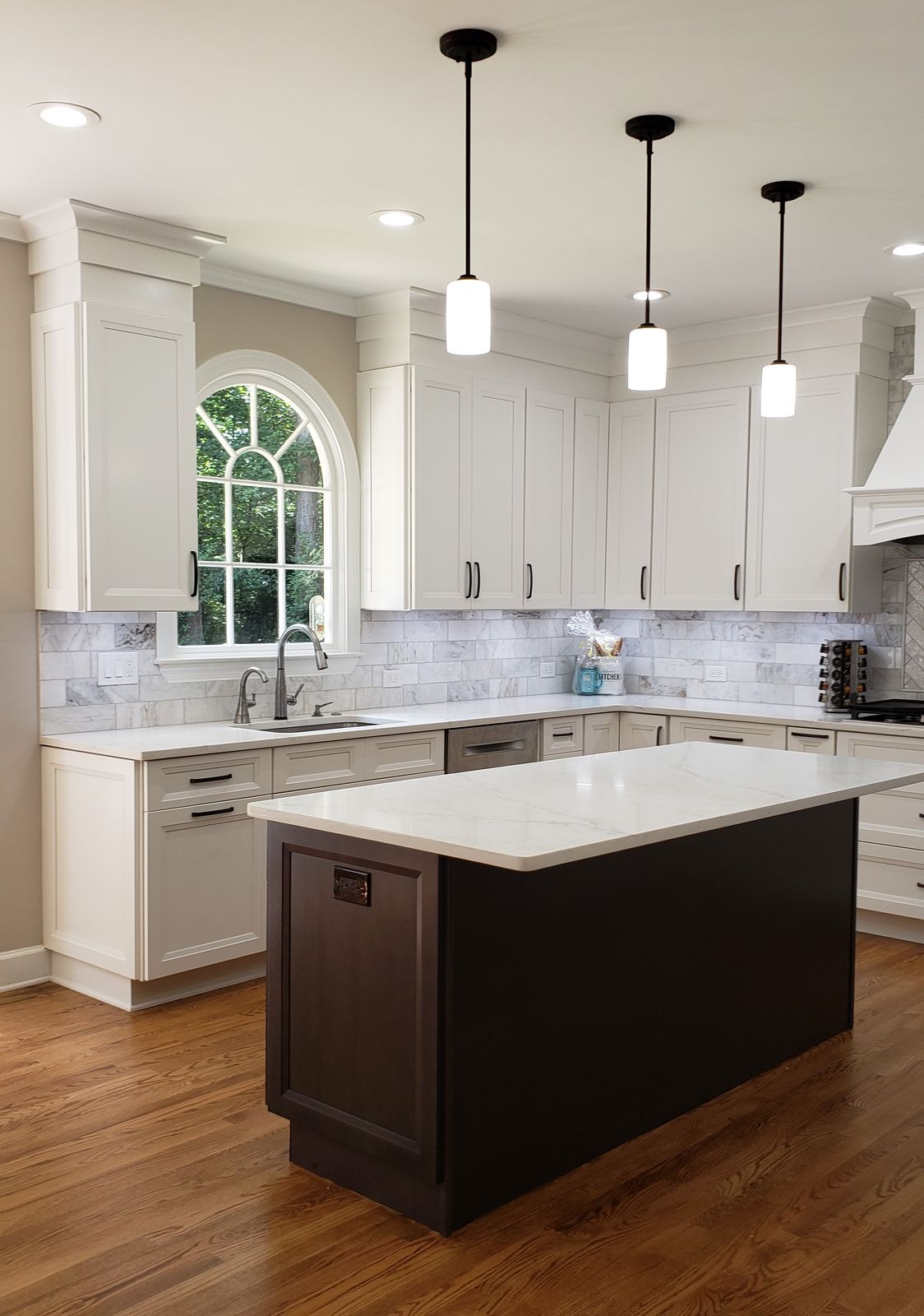
A two-tone kitchen is one of the easiest ways to add contrast without leaving the style. For example, a white perimeter with a gray, wood or dark island. See our two-tone kitchen cabinets guide for pairings.
Countertops and Backsplashes
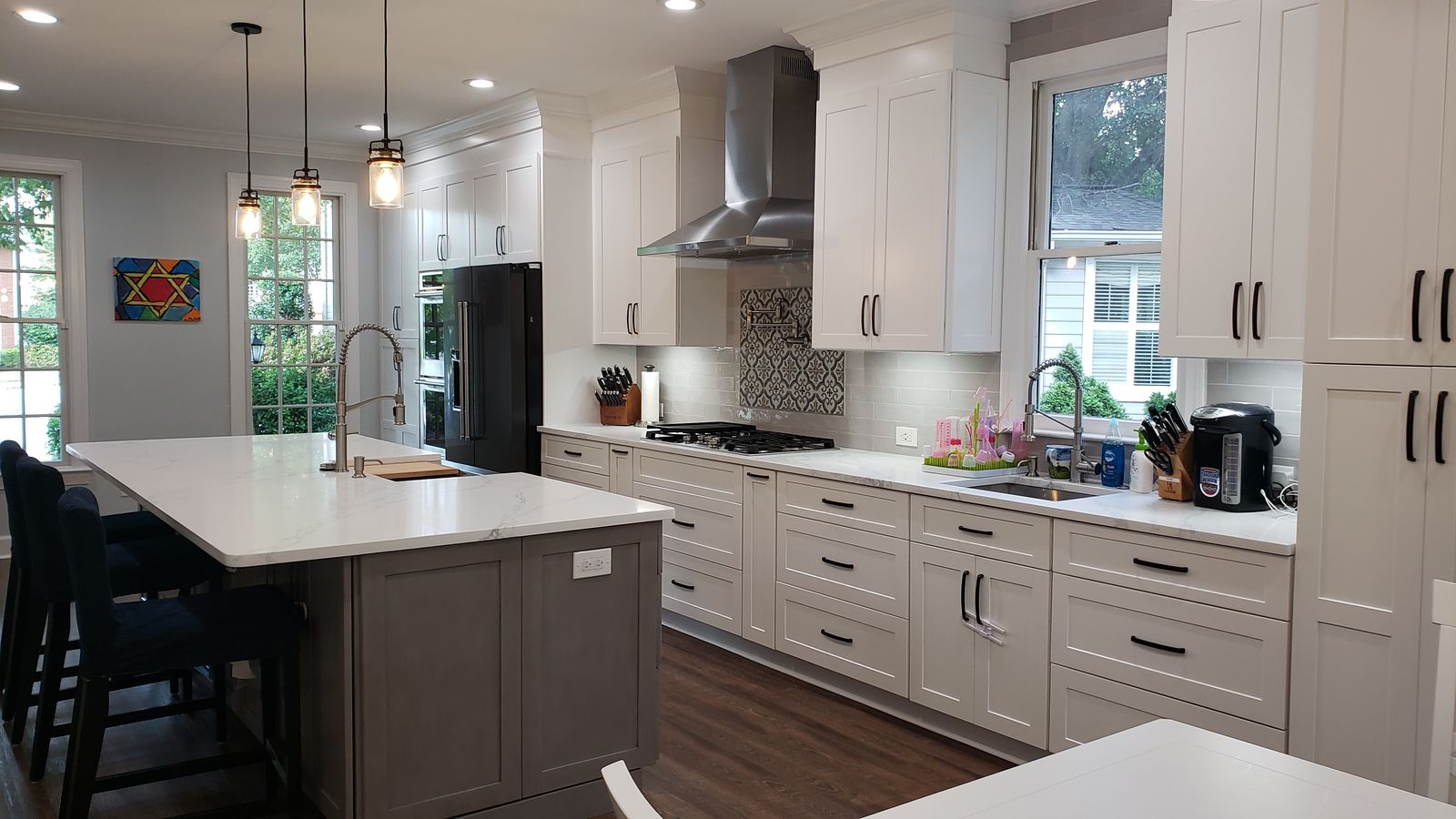
Natural stone suits transitional kitchens because it works in both traditional and modern rooms. Keep the edge profile simple (Houzz). If you’re choosing between materials, our quartz vs. quartzite vs. granite guide compares them.
For the backsplash, tile is still the most common material in renovated kitchens (72%), but slab backsplashes rose to 28% in the 2026 Houzz U.S. Kitchen Trends Study. Houzz also suggests using a traditional tile in a new way, for example stacking classic tiles in a straight grid instead of the usual offset pattern (Houzz).
Hardware and Lighting
Hardware is a small detail that can push a kitchen toward traditional or modern. In the 2026 Houzz U.S. Kitchen Trends Study, bar pulls led by a wide margin (74%), ahead of knobs (37%). Brushed nickel was the most popular finish (28%), followed by black (18%) and brushed gold (12%). Simple bar pulls in one of these finishes are a safe transitional choice.
For lighting, pendants over the island are where you can add a little personality: a simple shape, a glass or metal shade, or a finish that matches the hardware. For a fuller look at how those layers work together, see how to layer ambient, task and accent lighting.
How to Plan a Transitional Kitchen
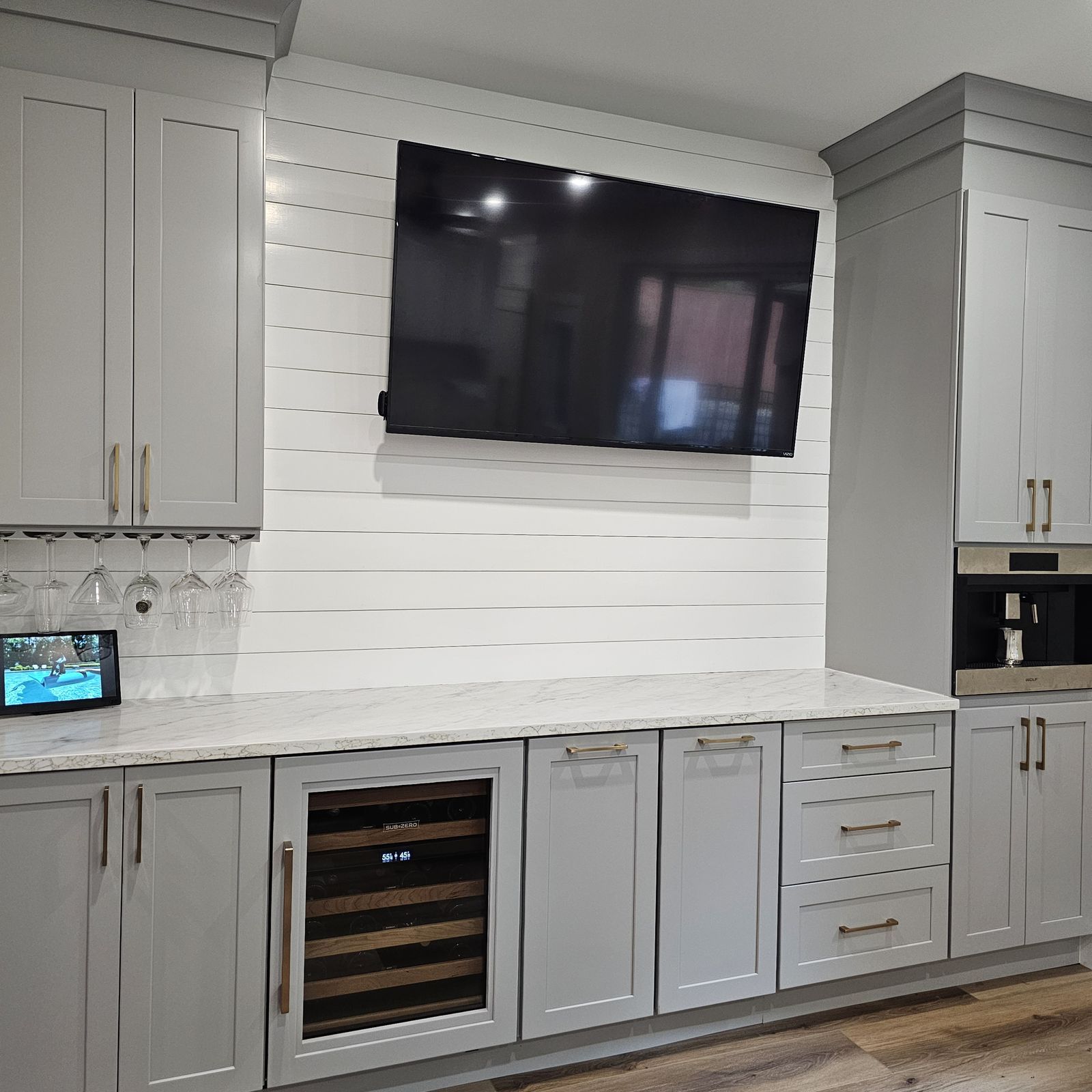
- Start with what stays. Floors, windows and the rooms next to the kitchen set limits. Transitional design is flexible enough to work with most of them.
- Pick your cabinet door first. A Shaker or other simple paneled door gives you the base. Then choose the color or wood tone.
- Choose one or two classic details, such as a paneled hood, furniture-style island legs or crown molding, and keep the rest simple.
- Keep the palette tight. Two or three main colors or materials, plus one metal finish for hardware and lighting.
- See it before you build it. At the design review appointment at our showroom on Tilly Mill Road, you can view sample doors, countertops and hardware and review your detailed design with 3D color renderings. See how our kitchen design process works, or our kitchen remodeling services.
Transitional Kitchen Design FAQ
What is a transitional kitchen?
A kitchen that blends traditional and modern design: simple paneled cabinets, natural or stone-look surfaces, a neutral palette and just a few classic details, without the heavy ornament of a traditional kitchen or the starkness of a modern one.
Is transitional kitchen design still popular?
Yes. In the 2026 Houzz U.S. Kitchen Trends Study, transitional was the top style among homeowners who changed their kitchen’s style, at 25%, more than double traditional at 12%.
What cabinet style is transitional?
Usually a Shaker or other simple recessed-panel door, painted or in a wood finish, with simple bar pulls.
What is the difference between transitional and contemporary kitchens?
Contemporary means current, so it changes with trends. Transitional follows a steadier formula: clean lines, a neutral palette, natural materials and a little traditional detail.
What drives the cost of a kitchen remodel in Atlanta?
It depends on size, layout changes and materials, not on the style. For a walk through those factors, see our guide to what drives the cost of a kitchen remodel in Atlanta.
Plan Your Transitional Kitchen
Visit our showroom at 4353 Tilly Mill Road #150, Atlanta, GA 30360 (Monday-Thursday 8:30am-4:30pm, Friday 8:30am-3pm ET), or call (404) 997-3788 to book a free consultation. Walk-ins are welcome, and a designer is always there, but appointments are still recommended. Our work is backed by our one-year contractor warranty. Licensed in Georgia: RBC0006934.