Cabinet doors do more than close a box. In a complete kitchen renovation they set the style of the room, affect how the space feels from an adjoining living area, and have to hold up to daily use. The door style, the finish, and the hardware should be chosen together, not as three separate afterthoughts.
Kitchen Design Studio & Remodeling of Atlanta plans cabinets as part of the full kitchen, not as a stand-alone swap. If you are comparing construction paths, see our guide to custom and semi-custom cabinets, and our page on custom kitchen cabinets for how we approach a built-to-the-room install.
How door style sets the tone of the kitchen
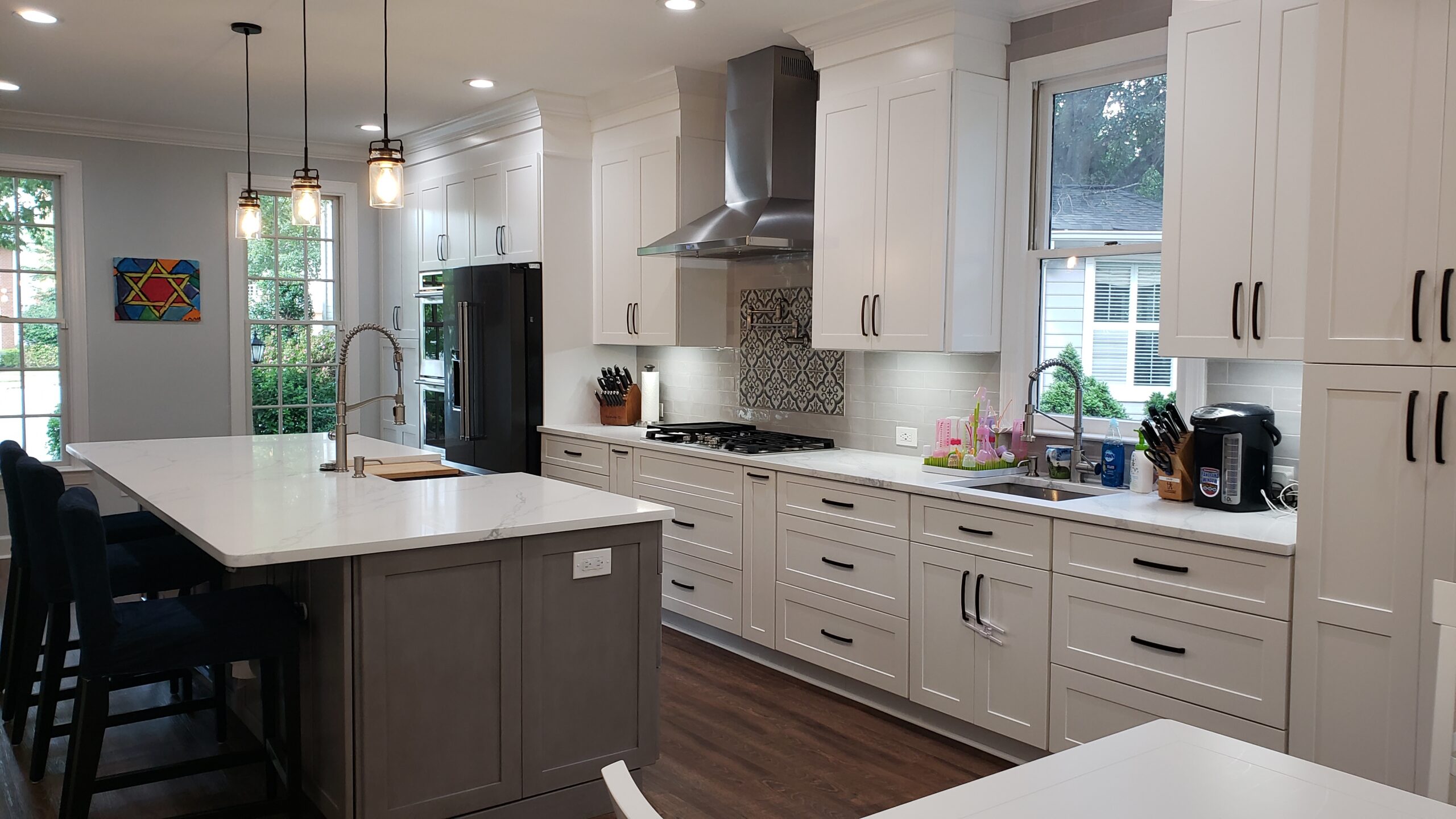
The profile of the door is what you see from across the room. A flat slab reads quiet and current. A five-piece Shaker door has a recessed center and a simple frame, which is why it works in so many houses. A raised-panel door adds depth and a more traditional feel. Glass-front doors can break up a long run of wood or painted faces and show what you want to have on display.
The architecture, the amount of light, and the rooms that open into the kitchen should all have a say in the door you choose.
Common kitchen cabinet door styles
Shaker. A five-piece door with a recessed center panel and clean framing. It is the most adaptable style we specify, because the finish and the hardware can take it toward traditional or more simplified rooms.
Slab. A flat door with no panel or applied molding. It suits a simpler, more current kitchen and keeps a small room from feeling busy. Grain direction and finish quality matter more here, because there is no profile to hide an uneven surface.
Raised panel. A center panel that steps forward from the frame. It has a more formal, traditional presence and is often used when the rest of the house already has detailed trim.
Inset. The door sits flush with the face frame. The look is tailored and precise, and the install has to be exact so gaps stay even through the seasons. Inset is a craft choice, not only a style choice.
Glass-front. Clear or frosted glass in place of a solid center panel. Used in a few openings, it can lighten a run of cabinets and put everyday dishes within reach. A few glass doors usually work better than a full wall of them.
Finishes that belong on new cabinets
The finish is not a later coat of paint on cabinets that are already in the room. It is specified with the new doors: a painted finish, a stained or clear wood finish, or a mix of the two. Sheen matters as much as color. A matte or low-sheen painted finish hides small marks better than a high gloss. A wood finish shows grain and warmth and should be chosen with the flooring and any exposed beams or trim in mind.
A second color or finish on the island is a proven way to add contrast without changing the door style. We cover that approach in more detail in our guide to two-tone kitchen cabinets.
Choosing a style that fits the house
Start with the rooms you will see at the same time as the kitchen. If the kitchen opens to a living room, the doors should sit comfortably next to that space. Lighter finishes can help a smaller or dimmer kitchen; deeper tones can work when there is plenty of light and enough cabinetry for the color to feel intentional rather than heavy.
Think about use, not only appearance. Houses with children or heavy daily cooking often do better with a finish that does not show every fingerprint, and with hardware you can actually grab with a full hand. Sample doors, viewed in the lighting of your house or at our showroom, tell you more than a photo on a screen.
Custom doors, standard lines, and hardware
Door style is available in more than one construction path. A semi-custom line may already include the Shaker, slab, or glass options you want, in sizes that fit a straightforward layout. Custom doors are the right call when the openings are unusual, the ceiling is high, or the layout needs boxes and faces that a standard line cannot provide.
Hardware should match how you use the drawer or door and sit in scale with the door profile. We choose it with the door samples, not after the cabinets are hung.
Frequently asked questions
What kitchen cabinet door style is the most versatile?
Shaker doors are the usual starting point because the recessed center panel and simple frame work in both traditional and more current kitchens. From there, the finish, the hardware, and whether you mix a second door style on an island can shift the look without changing the basic door.
What is the difference between inset and overlay doors?
Overlay doors sit on the front of the cabinet box and cover part or all of the frame. Inset doors sit flush inside the frame. Inset work needs tighter tolerances and a precise install; overlay is more common and can still look tailored when the reveal is even.
Are painted cabinet finishes hard to live with?
A factory-applied painted finish on new cabinets is made for daily kitchen use when it is specified and installed as part of a complete renovation. Pale colors show more wear in heavy-use spots; mid-tones and quality clear coats on wood are often easier over time. We talk through that during design, not after the doors are already finished.
Should cabinet doors match the rest of the house?
They should feel like they belong with the flooring, the trim, and the adjoining rooms, especially in an open layout. That does not mean every door has to be the same color. A quieter perimeter with a different island is a common way to add contrast without breaking the house into two styles.
When do custom cabinet doors make sense?
Custom doors make sense when the room has odd openings, a ceiling height that stock boxes cannot use well, or a layout that needs sizes you will not find in a standard line. If a semi-custom line already covers the sizes and styles you want, that can be the cleaner path. We compare those options before anyone orders boxes.
See the doors in person
If you are planning a complete kitchen renovation and want to compare door styles and finishes, start with a free consultation. Bring photos of the room and any finishes you already like. We can look at samples, talk through custom and semi-custom options, and fold the doors into the rest of the design.
Kitchen Design Studio & Remodeling of Atlanta, 4353 Tilly Mill Road #150, Atlanta, GA 30360, (404) 997-3788. Appointments are recommended. We have been remodeling kitchens and bathrooms for 11 years, and the work we install is covered by a 1-year warranty.