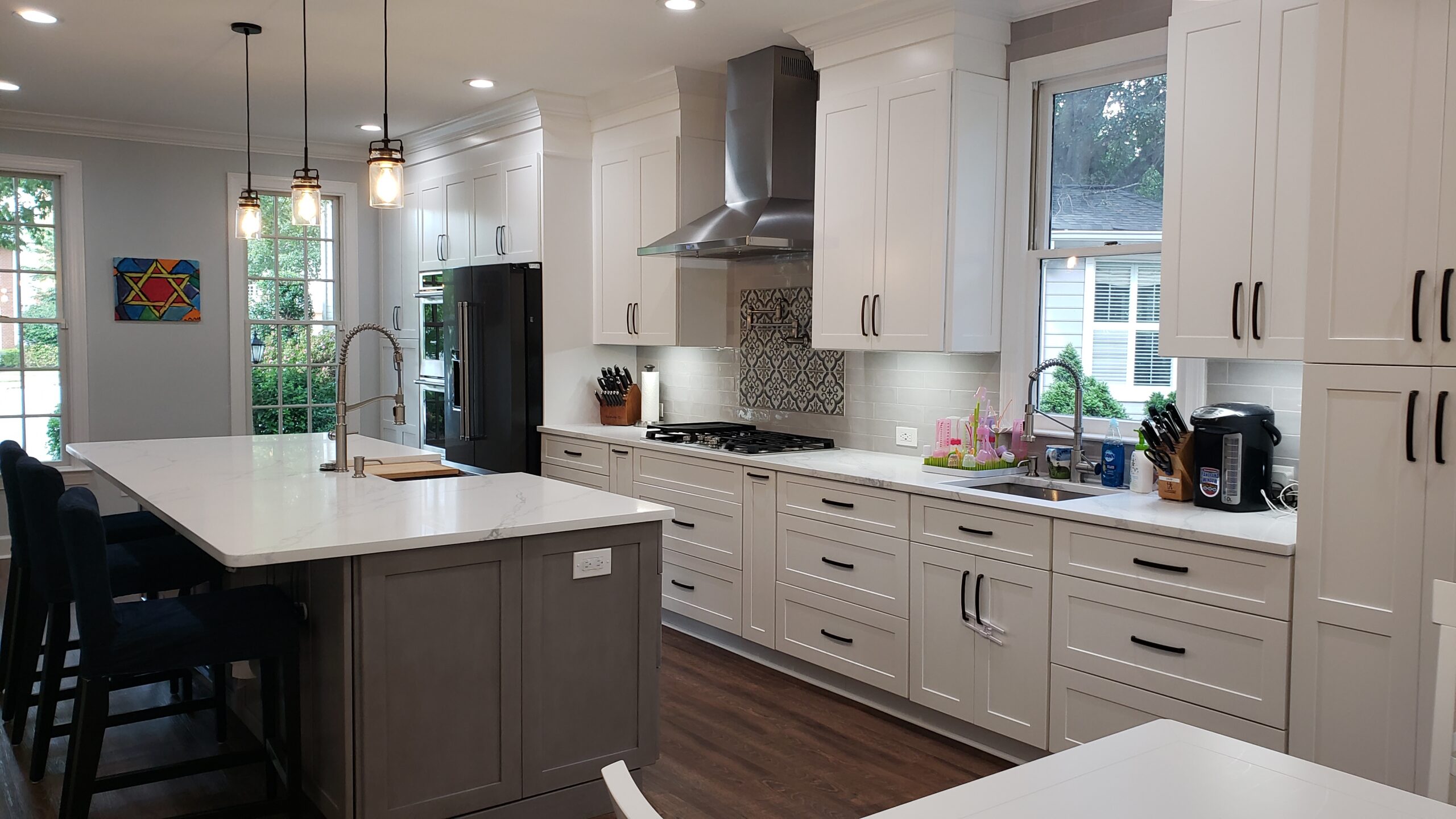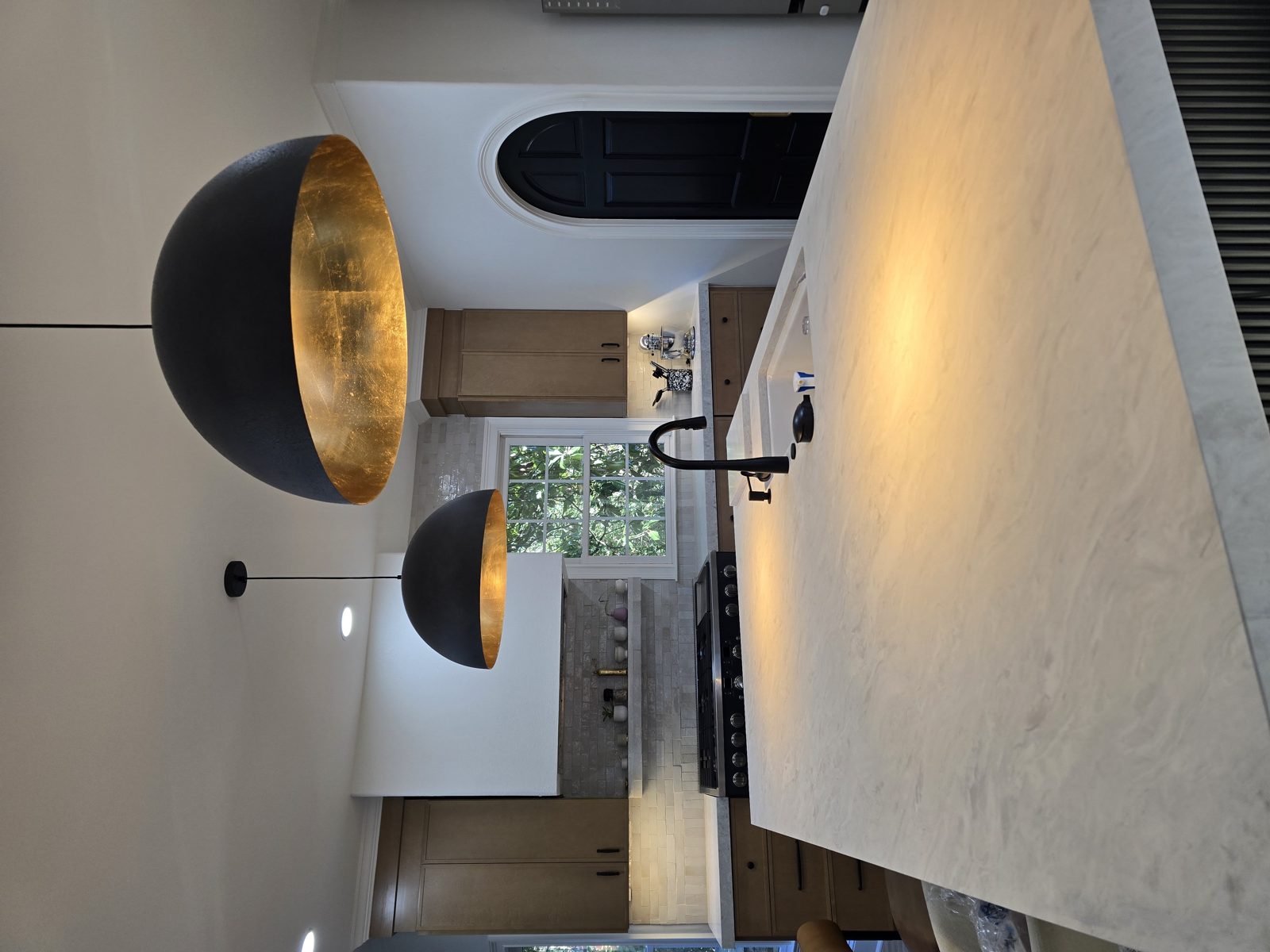
Two-tone kitchen cabinets use two different cabinet colors or finishes in the same kitchen. Done well, the second tone gives the room depth, highlights the island or the range wall, and lets you bring in a bolder color without committing every cabinet to it. Done badly, it can look like two kitchens stitched together.
We started as a cabinet distributor, and we help you choose cabinetry, finishes and materials. This guide covers the main ways to split two tones, pairings that work, and how to tie everything together. The photos are from kitchens we’ve built.
The Four Main Two-Tone Layouts
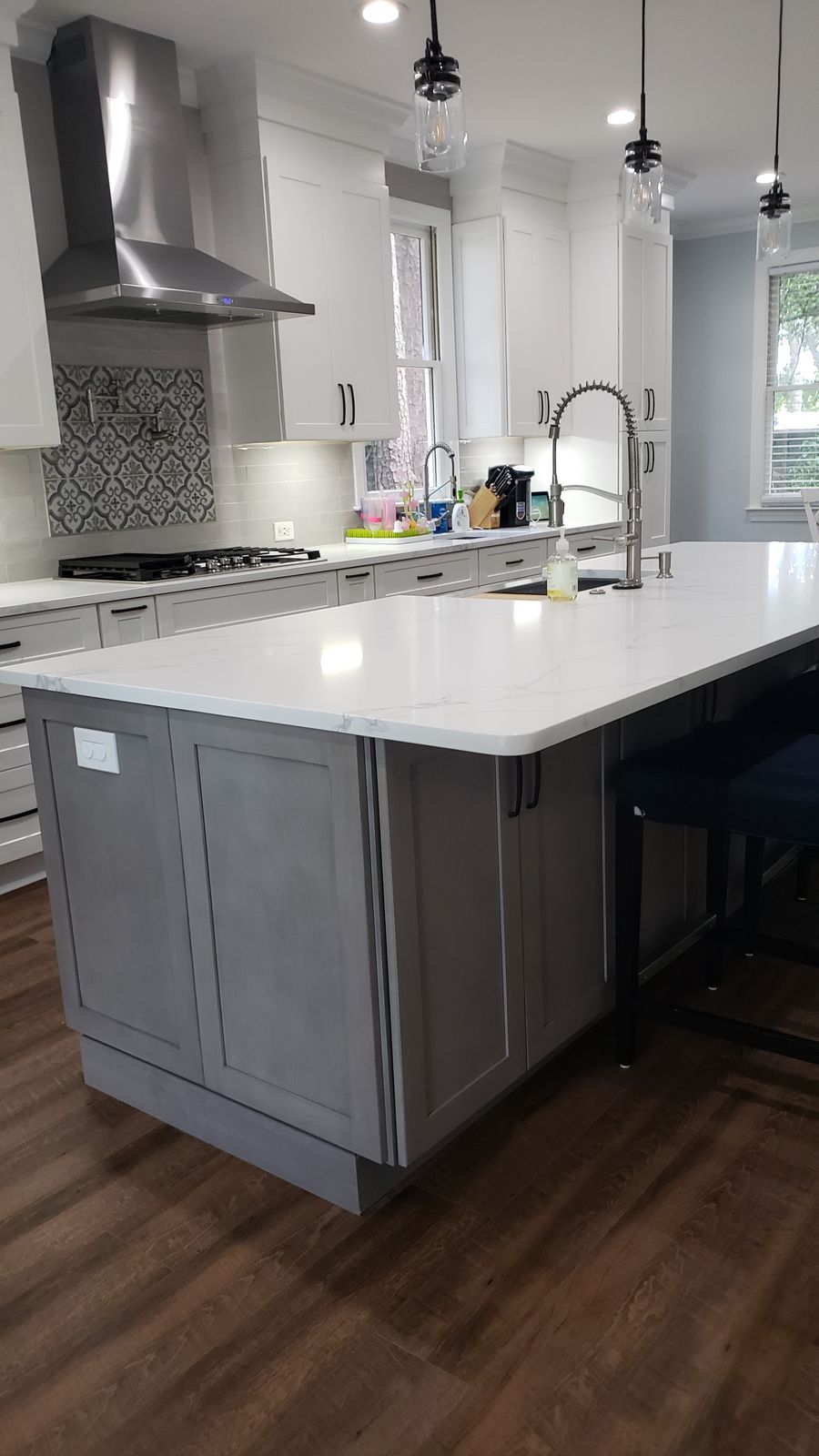
1. A contrasting island
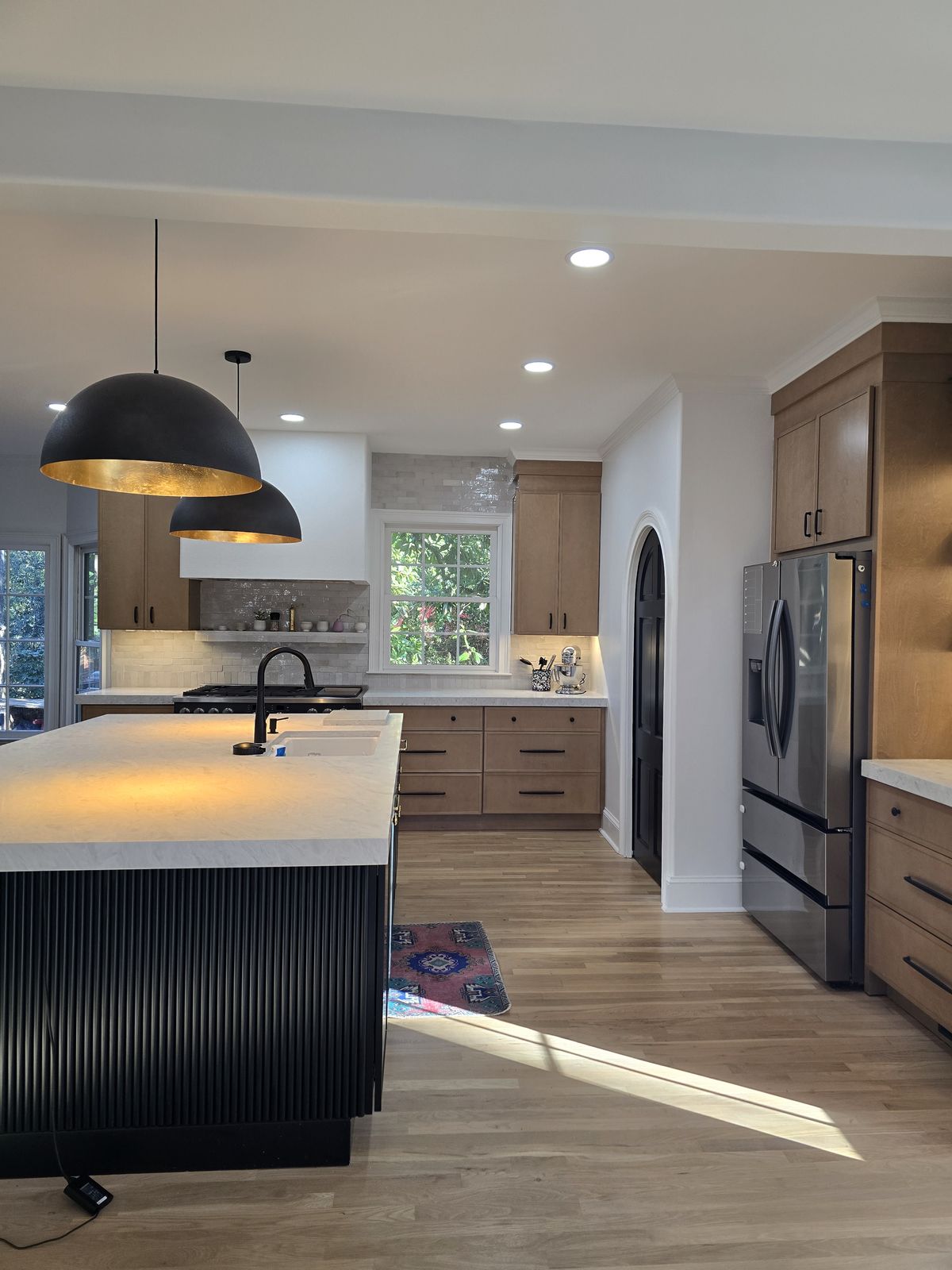
The simplest and most popular approach: the perimeter cabinets are one color, and the island is another. The island becomes the focal point, and the perimeter stays calm. It works in almost any kitchen size, because the second color sits in one block in the middle of the room.
2. Light uppers, darker lowers
Lighter upper cabinets keep the top half of the room bright, and a darker or wood-tone base grounds it. This split follows the way a room is usually lit: the eye reads the upper cabinets with the walls and ceiling, and the base cabinets with the floor. Many homeowners also like a darker base because it sits closest to shoes, pets and vacuum cleaners.
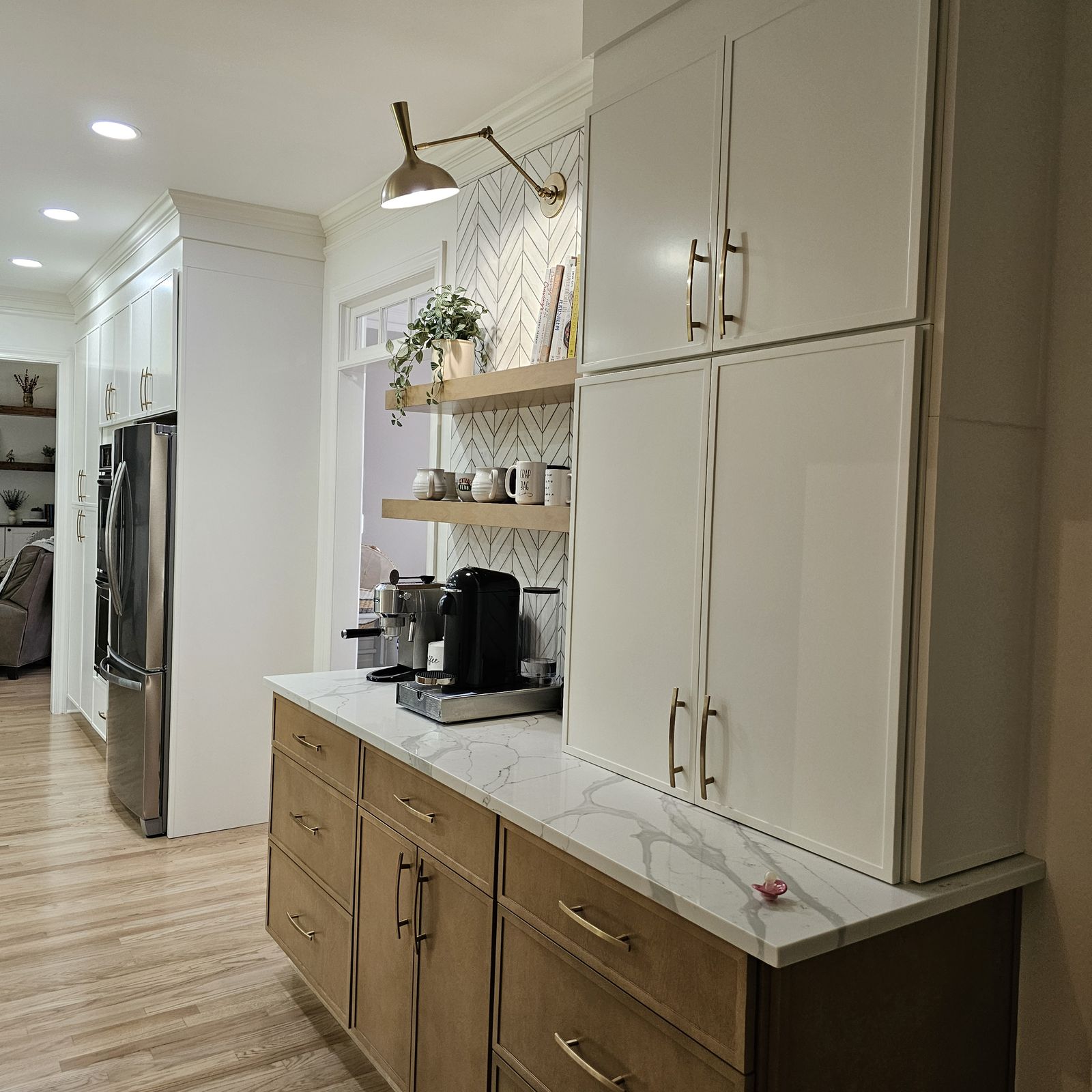
3. A feature wall or zone
Here, one area gets the second tone: the range wall, a coffee or beverage bar, a pantry wall or a built-in hutch. It’s a good choice when you want color in a defined spot rather than spread across the room.
4. Wood and paint
Pairing a painted finish with a stained wood finish is a two-tone kitchen too, and often the warmest version. The wood can be the uppers, the island, or a run of open shelves.
Color Pairings That Work
There’s no single right answer, but these combinations show up again and again because they’re easy to live with:
- White perimeter, navy or black island. High contrast, and it works with brass or black hardware.
- White perimeter, gray island. Softer contrast that suits a transitional kitchen.
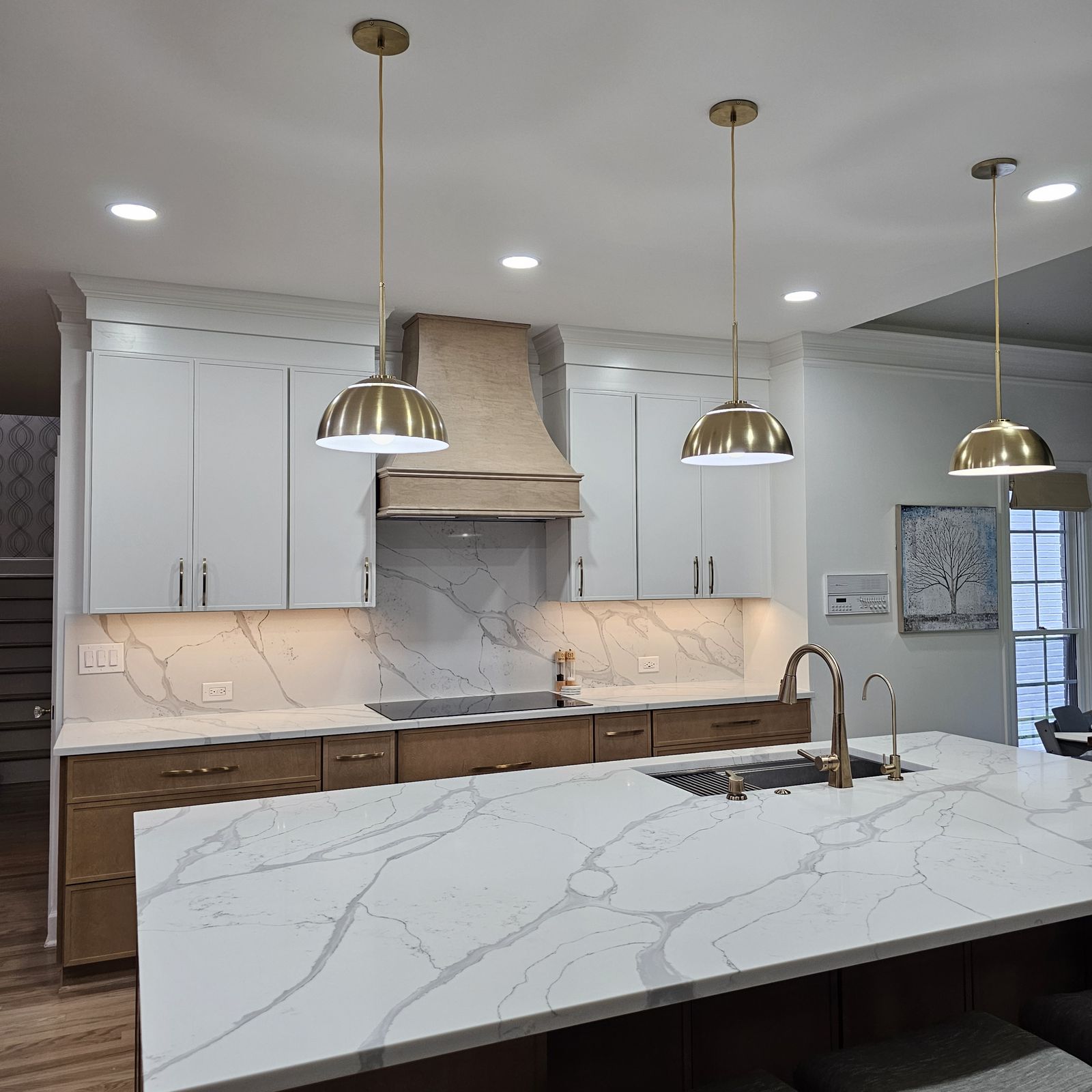
- White uppers, wood-tone lowers. Bright on top and warm underfoot.
- Wood perimeter, black island. Warm and dramatic at once.
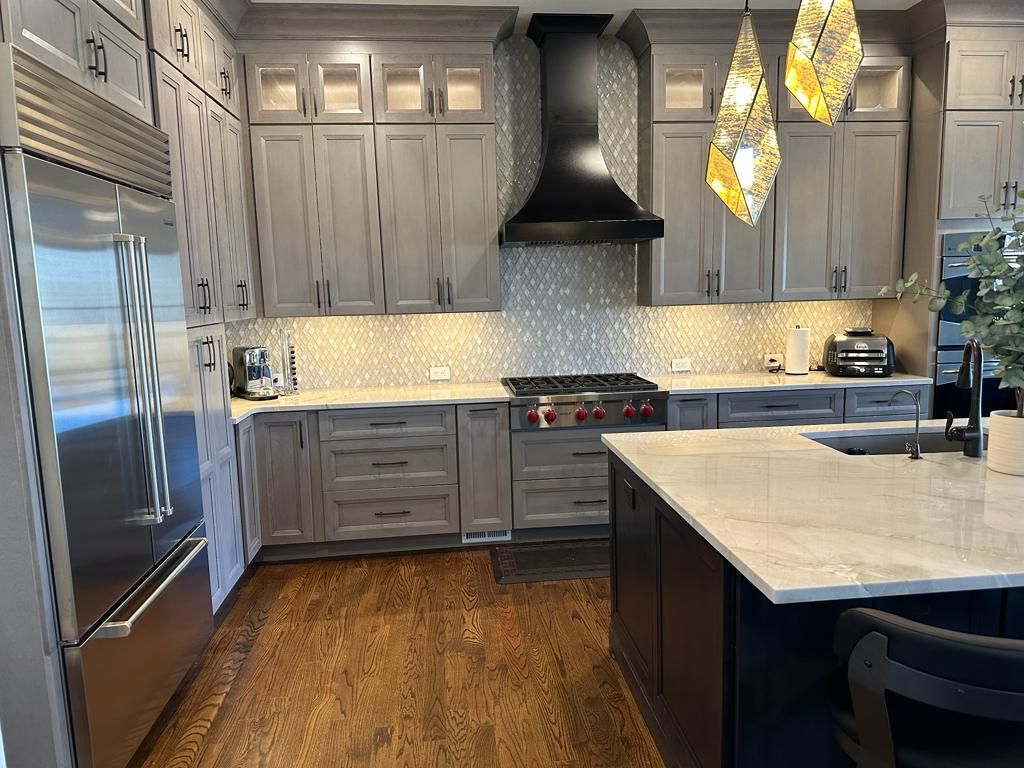
- Gray perimeter, darker island. A tonal look: two shades of the same family rather than two different colors.
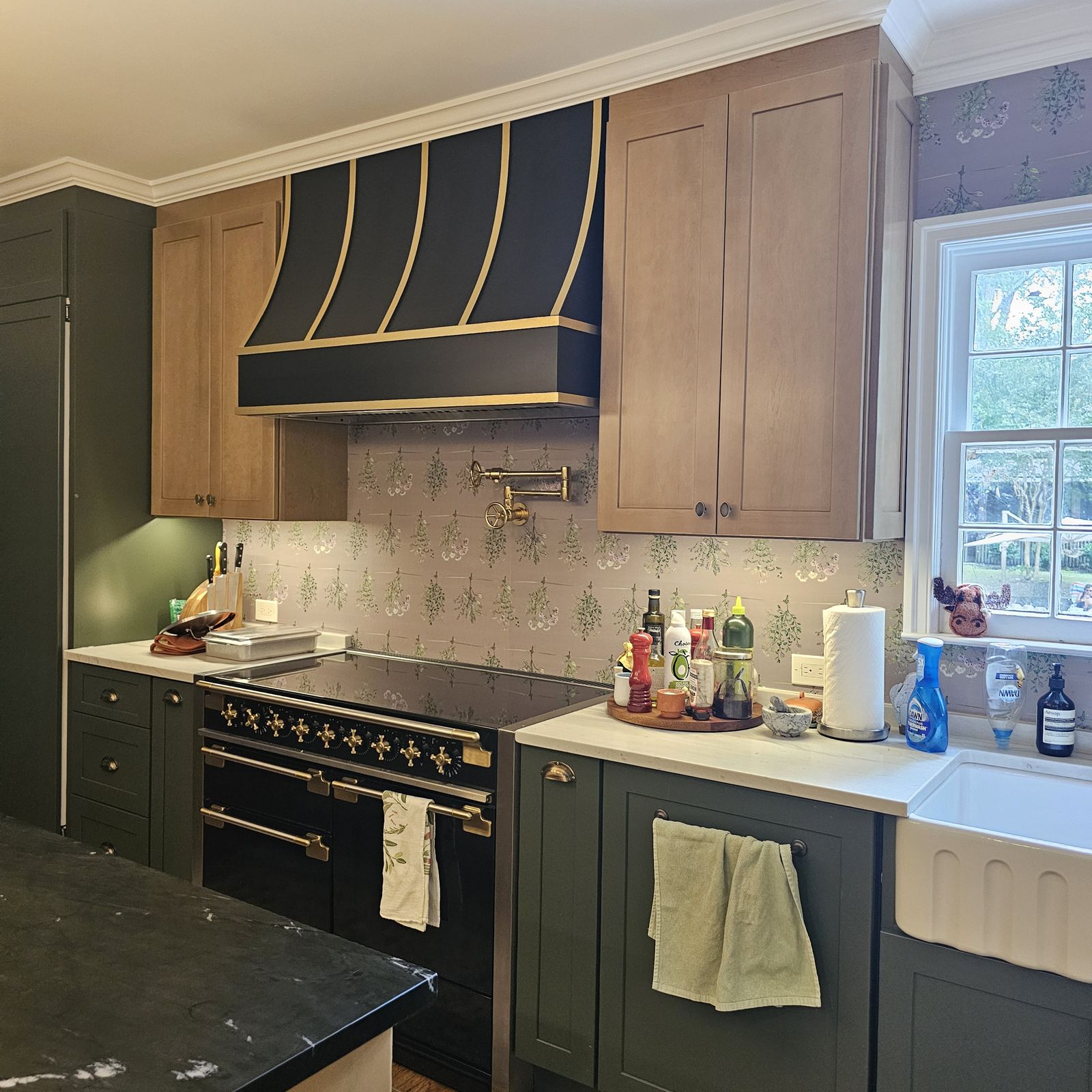
- Green lowers, wood uppers. A richer, more traditional pairing that does well with brass.
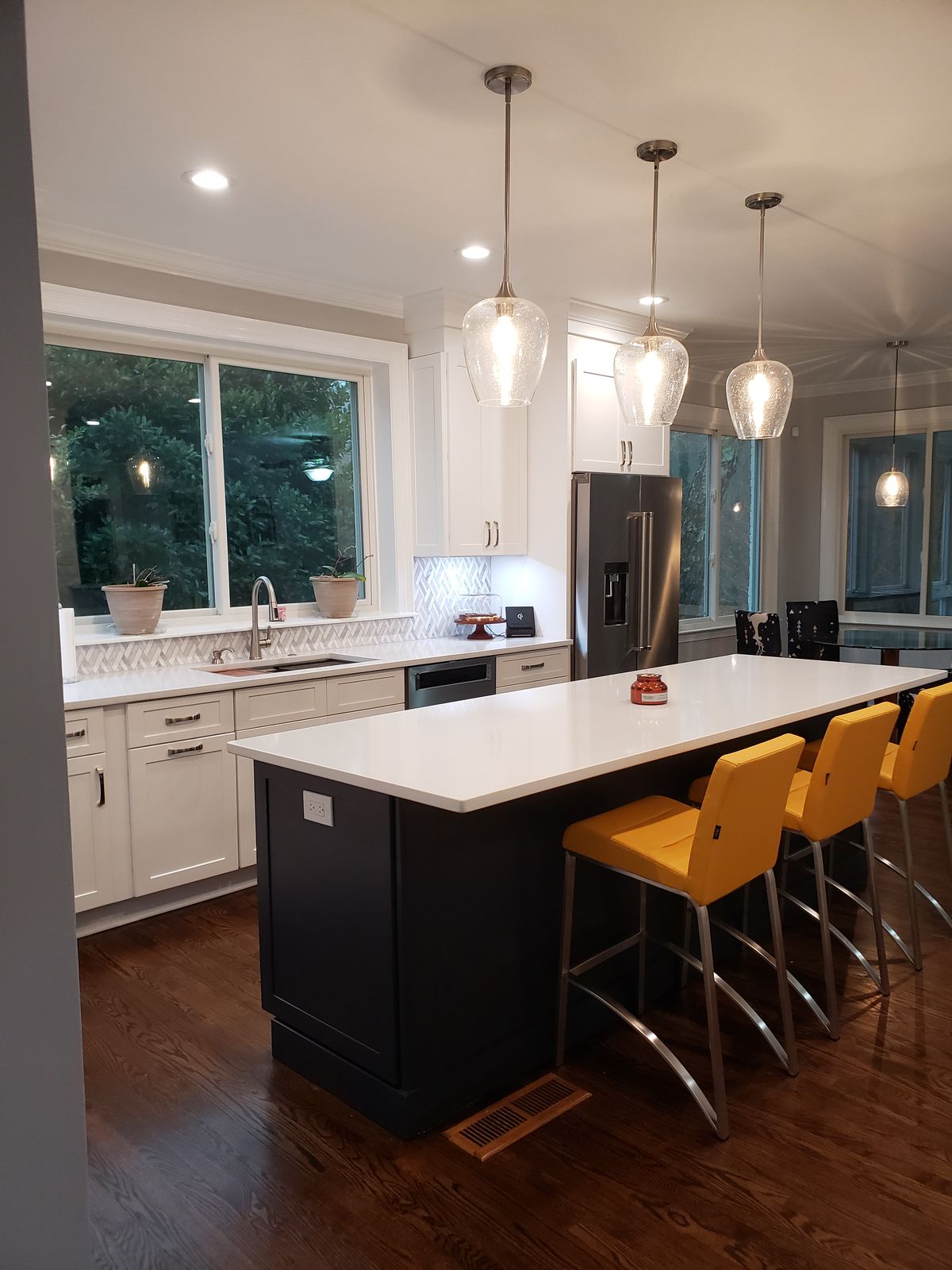
When you compare colors, look at them together and in the room’s real light. A navy that looks almost black on a sample card can read much brighter next to a white cabinet under a window. That’s one reason we keep sample doors in our showroom. You can hold two finishes side by side before deciding.
How to Tie Two Tones Together
The best two-tone kitchens repeat something across both colors so the room still feels like one design.
- One hardware finish. Using the same pulls and knobs on both tones is the easiest way to connect them. Brass is a common choice because it suits white, wood, navy and green alike.
- One countertop family. The same countertop on the island and the perimeter, or two tops from the same color family, keeps the contrast in the cabinets rather than everywhere at once. If you’re choosing between stone types, see our guide to quartz vs. quartzite vs. granite.
- A repeated accent. Pick up the second tone somewhere else: a wood hood to match wood lowers, open shelves to match the island, or bar stools that echo the accent color.
- Consistent door style. Keep the same door profile on both tones unless you’re deliberately mixing styles. A shaker perimeter with a shaker island looks planned; a shaker perimeter with a slab island needs a clear reason.
Two-Tone Ideas by Kitchen Size
- Small or galley kitchens: keep the uppers light and put the second tone on the base cabinets only. Lighter uppers keep a narrow room feeling open. A darker base adds depth without closing the space in.
- Kitchens with an island: the island is the natural place for the second color. If the island is long, repeat its color in one more spot, such as a hutch, a pantry door or bar stools, so it doesn’t look isolated.
- Open-plan kitchens: think about the rooms you can see from the kitchen. A wood or deep-color base can pick up a family room’s furniture or flooring, and the uppers can match the wall color around them.
- Tall ceilings: stacking a second tone on top of the uppers, or using it on a tall pantry wall, helps break up a very tall run of cabinets.
Common Mistakes to Avoid
- Two colors that compete. If both tones are strong, nothing stands out. Let one color lead and the other support it.
- Splitting the room in an odd place. A color change in the middle of a run of cabinets, with no wall, appliance or column to stop it, can look unfinished.
- Ignoring the floor. A dark island on a dark floor can disappear. A wood-tone base on a wood floor needs enough contrast in tone or grain to read as a cabinet.
- Too many finishes. Two cabinet tones plus a busy countertop, a bold backsplash and mixed metals can feel cluttered. Calm one element if another is loud.
- Choosing from a screen. Photos shift color. Look at real doors before you order.
Does Two-Tone Cost More?
It can. A second finish can affect the cabinet price, depending on the cabinet line and finish. Your itemized proposal shows exactly what’s included, so you can compare a one-tone and a two-tone layout before deciding. We don’t quote prices on this page. For typical budgets, see our kitchen remodel budget guide. If you’re also deciding how custom to go, read custom vs. semi-custom cabinets.
Planning a Two-Tone Kitchen With Us
Our process has three steps:
- Initial meeting at your home. We talk through your goals and budget and measure the space.
- Showroom visit. You compare sample doors, colors, countertops and hardware, then review your design in 3D color renderings with an itemized proposal. Seeing two tones in a rendering is the easiest way to check the balance before anything is ordered.
- Final measurement. Our designer and master craftsman confirm every detail at your home before the cabinets are ordered.
Learn more about our 3D kitchen design process and custom cabinetry. Our work is backed by our one-year contractor warranty.
Two-Tone Kitchen Cabinets FAQ
What are two-tone kitchen cabinets?
They’re kitchens that use two different cabinet colors or finishes, most often a contrasting island, light upper cabinets over darker lowers, or painted cabinets paired with stained wood.
Which cabinets should be the darker color?
Usually the island or the base cabinets. Darker tones low in the room feel grounded, and lighter uppers keep the room bright.
What hardware works with two-tone cabinets?
One hardware finish across both tones is the easiest way to tie them together. Brass works with white, wood, navy and green; black works well with white and wood.
Should the island countertop match the perimeter?
It doesn’t have to, but using the same countertop, or two from the same color family, keeps the kitchen feeling like one design while the cabinets provide the contrast.
Does a two-tone kitchen cost more?
It can, depending on the cabinet line and finish. Your itemized proposal shows exactly what’s included, so you can compare options before deciding.
Can I see two-tone combinations before I decide?
Yes. At our showroom, you can compare sample doors in different colors side by side, and we review your design in 3D color renderings before anything is ordered.
See Two-Tone Options in Person
Call (404) 997-3788 to start with a consultation at your home, or visit our showroom at 4353 Tilly Mill Road #150, Atlanta, GA 30360 (Mon–Thu 8:30–4:30, Fri 8:30–3:00 ET). Walk-ins are welcome, and a designer is always there, but appointments are still recommended. We don’t offer financing. You’ll get an itemized proposal before work begins. We also remodel kitchens nearby, including Sandy Springs and Chamblee.